
Welcome to Aurea Agency’s trend report for Q2-Q3!
Every quarter or so, we unpack the shifts shaping marketing, communications, brands, and tech. Not as predictions, but as observations — from the work we do, the brands we help build, the missions we support, and the world we move through.
We publish the full report on our Substack, a slower channel for clearer thinking, where we explore what's changing, what's returning, and what still matters. Subscribe to our Substack here.
What Sweden can teach us about building
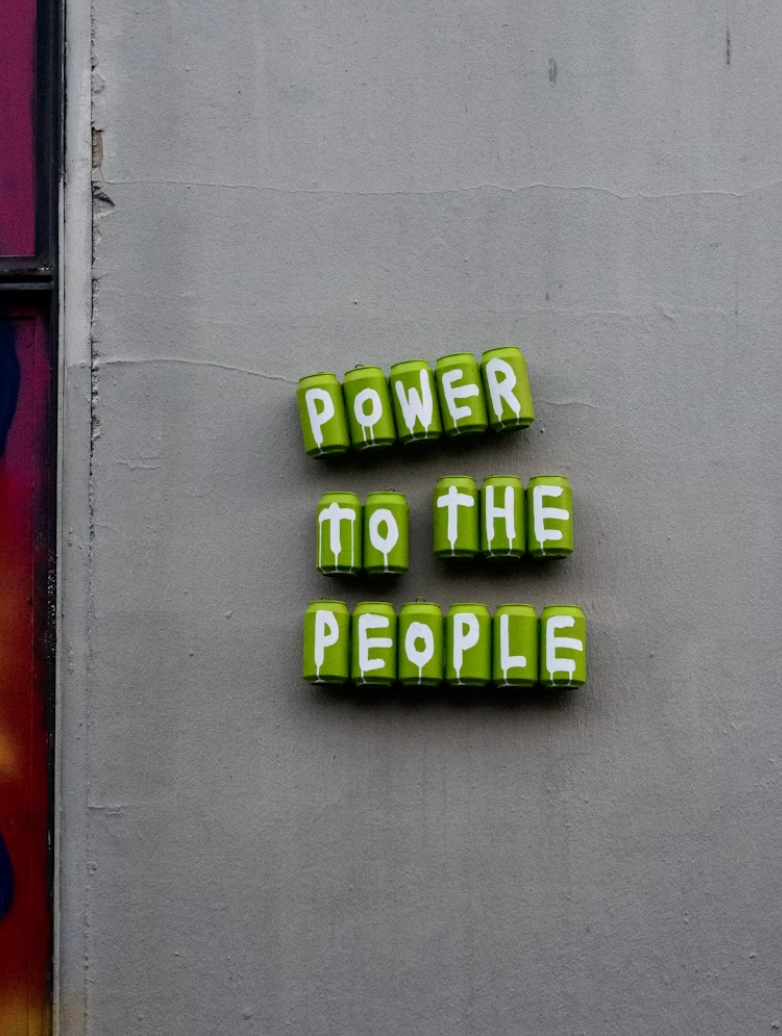
In Finland, we’re a proud country of builders. Our engineer-minded culture has produced globally respected tech products, services, and infrastructure. But technical excellence alone has never been enough. The real competitive advantage comes not only from what we build, but from how we position it, create meaning around it, and communicate it.
That’s where we still have a lot to learn from our next-door neighbour, Sweden.
The Swedish tech scene — affectionately dubbed “Silicon Valhalla” — is booming, powered by global OG names like Spotify and Klarna, and the recent, explosive rise of Stockholm-based AI startups Lovable and Legora. Sweden produces more unicorns per capita than any other European country, driven by a strong team-oriented culture, low turnover, and a global-first mindset.
Through Aurea Agency’s recent webinar with the Finnish Startup Community and our Swedish e-commerce client, Kustom (a Klarna spin-off), one thing became clear: the difference isn’t just capital. It’s a growth mindset paired with a genuine capability to innovate — especially with AI. Swedish brands tend to build with sharper positioning from day one: stronger identity, more clarity, a deeper understanding of community not as a byproduct, but as infrastructure.
They might have more funding. What’s more interesting is how deliberately they use it: more brand-led, more long-term.
Thinking bigger and learning faster — simultaneously
A simple way out of a growth rut? Fix how we think about AI. Here's how we think about it.
In our Q1 trend report, we explored how, in a world of accelerating systems, meaning, offline moments, and real presence become the true differentiators. The need for human connection is rising — and so is the role of AI.
AI isn’t just changing how we work; it’s also changing how decisions get made and, overall, how businesses are built and run (and how the world works).
That creates a new kind of tension.
The more tools and systems mediate our world, the more intentional we need to be about staying human within it.
Learning from each other, building together, showing up in real spaces. These are no longer soft values. They’re strategic advantages.
AI is not a tool but a teammate
The old question was “how do I prompt AI better?” The better question is “what have we built together that neither of us could, or doesn’t have time to build alone?” That’s a shift from output to system, from AI as something you operate to AI as something you co-develop with.
The teams pulling ahead aren’t the ones with the best prompts. They’re the ones who’ve built shared workflows where AI holds context, challenges assumptions, and surfaces options a human working solo would miss. You’re not losing your job to AI. You’re losing the version of your job that only required you.
The relationship with AI is shifting to how collaboration is built. It’s no longer only about prompting, but about building shared creative systems where AI extends thinking rather than replaces it.
The best teams won’t simply use AI, but they’ll co-create with it. So no, we’re not losing our jobs; we’re simply losing the old way of doing them. AI is your future team!
We are over-equipped, but under-trained
Tools have multiplied faster than our ability to use them well. We have more subscriptions, more capabilities, and more ways to get things done—but often no shared system for knowing which tool to use, when, or why.
At the same time, our capability has grown. We can accomplish more with the same amount of time. But attention, focus, and creativity haven’t kept pace.
The bottleneck is no longer access to resources. It’s tool literacy: knowing what to use, when to use it, and how to use it with intention.
AI is reshaping how value is discovered and perceived
This changes the role of consumer brands, too. Marketing used to optimise for a person scrolling. Now it increasingly has to optimise for a system that summarises, compares, and recommends.
The way we sell—and the way people buy—is changing. AI is no longer just a productivity tool; it is becoming a new layer of decision-making. Product discovery and comparison, persuasion, and trust are increasingly being redistributed across systems that look nothing like traditional marketing channels.
Agentic commerce is the next step: AI agents will increasingly discover products, compare options, make recommendations, and even complete purchases on our behalf—fundamentally changing how marketplaces work.
It's not just what you say; it's whether machines can even read it
Most websites are built for humans: menus, styling, banners, all the visual stuff. When an AI system reads that same page, it has to dig through the clutter to find the facts and often loses important content along the way.
So being found in AI answers isn’t only about saying the right things. It’s about restructuring your site so machines can actually parse it. That means adding clean, separate layers of facts behind the page, and simple files that map out what matters, cutting through the visual noise built for people.
None of this replaces the basics, though. Real authority on your topic and consistent mentions across credible sources still matter most. The technical fixes make sure that authority is visible to the systems doing the reading.
Call it GEO or AEO, if you want a name for it. But really, it’s brand consistency, doing double duty as strategy. So forget reach. The real question is whether AI can read you clearly enough to vouch for you.
Human creativity remains irreplaceable
AI is brilliant at remixing what already exists — fast. What it can't do is care about something for no reason, or choose the illogical thing just because it felt true.
As content gets more optimised, creativity stays the opposite: imperfect, opinionated, emotionally specific. Originality was never about novelty. It's about authorship with intent.
The real skill isn't resisting change. It's spotting the pattern early enough to move with it.

Comments